Tuesday, December 20, 2016

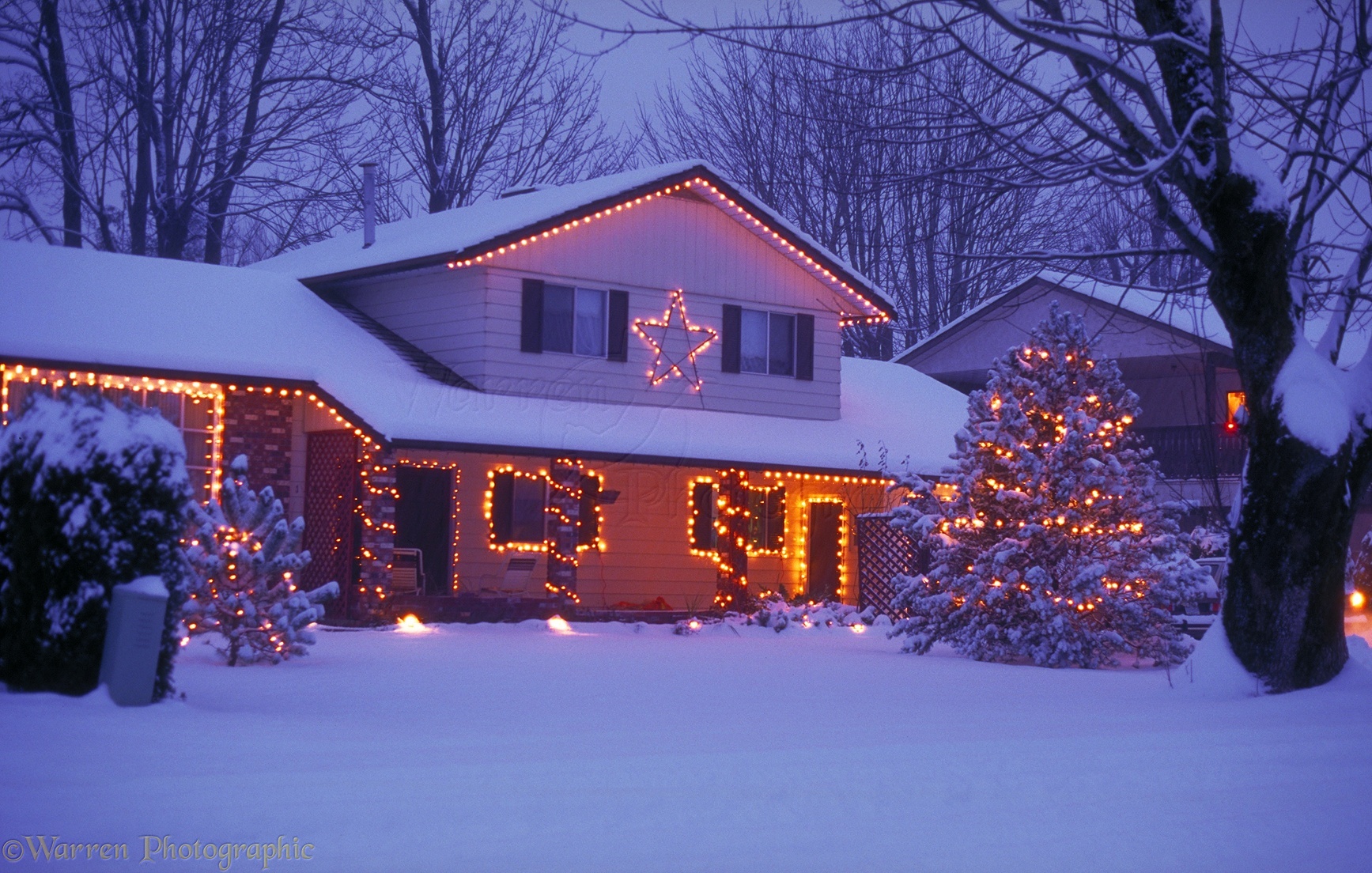
Upkeep Your Home For Winter

Preparing your home for winter is an important annual ritual for homeowners. For instance, did you know that adding insulation in your attic before winter arrives can help prevent ice dams this winter? And do not forget that tuning up your heating system now can help prevent more costly emergency repairs at the height of a storm, when it can be difficult to find supplies and licensed contractors. The following winter maintenance tips can help you prepare your home to withstand another cold season.

1. Have your fuel tanks filled and keep an eye on levels throughout the winter.

2. Set your heat no lower than 55 degrees as the temperature inside the walls where water piping is located is colder than the living spaces; open doors to unoccupied rooms to keep an even temperature throughout the house.

3. Maintain your wood-burning or pellet stoves according to the manufacturer's instructions.

4. Is your insulation prepared to protect you from the cold? As an important line of defense from winter’s gusty winds and freezing temperatures, it is worth taking time to inspect and upgrade insulation and weather stripping before the season starts.

5. Add extra insulation in the attic to help guard against ice dams. If too much heat escapes into the attic, it can warm the ice and snow on the roof. When it refreezes, it can cause an ice dam, which can lead to water damage inside your home or possibly even a roof collapse.
Add weather stripping around doors and caulk windows to guard against drafts and heat loss.
Remove screens from windows and install storm windows, if appropriate.

6. Freezing temperatures can be especially damaging to your home’s water piping. Make sure your pipes are adequately prepared to withstand a cold snap and remember to take extra precautions if you are going to be leaving your home, including shutting off your water.

7. Check for water leaks and fix problems immediately; wrap water piping in UL-Listed heat tape and insulate if it is exposed in unheated areas such as garages, crawl spaces or attics. Use only thermostatically-controlled heat tape if your water piping is plastic, and follow the manufacturer's installation instructions.

8. Learn how to shut off your water and know where your pipes are located in case they do freeze; you may be able to prevent water damage.

9. Trim trees and remove dead branches so they do not damage your home or injure someone if they fall because of ice, snow or wind.

10. Keep gutters clear of leaves, sticks and other debris to help ensure melting snow can drain properly. Make sure downspouts direct water away from the foundation.

11. Repair steps and handrails to make them safer in the ice and snow.
Check smoke detectors, fire alarms and carbon monoxide detectors, and replace batteries to ensure they are operating properly.

12. The first storm of the year can come sooner than you think. Stock up early and get key equipment, like snow blowers and generators, in good working condition long before you need them, so you can be prepared to enjoy what the season has to offer.

13 Make sure you have snow shovels and a roof rake on hand. Stock your ice melting compound to melt ice on walkways.

14. Have your snow blower and generator serviced and any necessary repairs made.

15. Keep fuel for snow blowers and generators in approved safety containers and away from heat or flame-producing devices. Do not store fuel in your basement.


Source: Traveller's Insurance

Shauna Quick
Realtor
Exit Realty Success
shaunaqsellshomes@gmail.com
www.shaunaqsellshomes.com

Tuesday, November 8, 2016

Winterizing Your Home On A Budget

Securing your home against winter is always a prime consideration for homeowners, no matter where you live. Regardless of what direction the cost of heating oil, propane, and other fuels is heading, it makes good sense to ensure that you and your family stay comfortable the entire season while protecting your investment.

The good news is that it doesn’t have to be expensive. There are a surprising number of easy things you can do at minimal cost that can maximize energy savings this winter. Below are suggestions for budgets of $100, $250, and $500 (at current prices), as well as some ideas that cost nothing.

$100 or Less

• Basic caulk gun ($20) and four tubes of caulk ($7.50 each) to fill gaps in siding, windows, and doors. For drafty windows and doors, don’t just fill the gaps on the outside, says home renovation and remodeling consultant Dean Bennett of Dean Bennett Design and Construction in Castle Rock, CO. “Pull the molding off to fill the insulation gaps around the window jamb.” If you prefer, you can use a can of low-expansion window foam ($7 each) instead of caulk. Cost: $50

• Plastic film window insulating kit, enough for five to six windows. Cost: $20

• Weatherstripping for windows, four 17-foot rolls. Cost: $20 ($5 each)

• Replacement filter for central heat and air unit. Mike Kuhn, director of technical services at HouseMaster and author of The Pocket Idiot’s Guide to Home Inspection, says it’s a must to change your furnace and air conditioning filter on a regular basis, at least every three months or more often. “Clogged filters reduce heating and cooling efficiency and can reduce the useful life of the appliance,” says Kuhn. Cost: $10

• Door threshold/sweep strip (three) to fill air leaks beneath doors. Cost: $75 ($25 each)

• Door gasket (three) to fill leaks around doors. Mark Furst of Grading Spaces, a home inspection and performance analysis company in Fort Atkinson, WI, recommends that homeowners check all exterior doors for tight-sealing gaskets. “I often see doors that only seal well when the door is slammed and then the deadbolt lock engages,” he says, blaming the condition on worn-out gaskets, though the doors themselves are still in good shape. “Adding a sweep strip to the bottom of the door helps to block drafts,” he adds. Cost: $75 ($25 each)

$250 or Less

• Home energy audit from your utility company. Most utility companies offer home energy audits to their customers. An inspector will visit your house and check the furnace and central air conditioning unit for efficiency and safety and leaks, gaps in attic and wall insulation, and the condition of your water heater and pipes. Remember, many home improvements are tax-deductible, especially where energy is concerned. Cost: $150 on average

• Install a programmable thermostat. Although thermostats can be adjusted manually, Bennett says that a programmable thermostat will avoid any discomfort by returning temperatures to normal as you wake or return home. Cost: $35 to $100

• The chimney can be the number one source of heat loss in a house. Use a chimney balloon to prevent drafts from flowing through your chimney and prevent heat from escaping. Cost: $55 per fireplace

• Three rolls of fiberglass insulation to pack around basement doors, windows in unused rooms or around exterior windows, doors, and air conditioning units. Cost: $75 ($25/roll)

$500 or Less

For another $250, you can add:

• An annual checkup, cleaning, and maintenance for your central heating and air unit and all air ducts. Cost: $250

• A ceiling fan that also heats the room. The Hunter Fan Company introduced a decorative ceiling fan that contains a small unit to provide a supplemental source of heat. The fan blades direct the heat towards the floor and help spread it throughout the room. Cost: $250

• Mark Furst says that one frequently overlooked spot is the sill box in the basement, which is on top of the foundation and under the floor. “This is one of the least insulated areas in a house,” he says. He likes to fill the gaps and leaks with a two-part spray foam to seal and insulate the whole space. Cost: $250

Winterizing for Practically Nothing
You can get something for nothing. Here are some ways to winterize your house that are virtually free:

• Roll up a towel or throw rug to close gaps at the bottom of all exterior doors, but leave the gaps on interior doors free to allow heat to circulate between rooms.

• If you live in a snowy part of the country, bank the snow up against the house to provide a bit of insulation from the cold.

• Jason Raddenbach of Chimney Balloon suggests clearing the lint from the outside dryer vent. Make sure the flap closes completely when the dryer isn’t running. And while you’re at it, he says, vacuum out the muck from the HVAC return vent covers. If air cannot escape the dryer because of restrictions in the vent pipe, it will have to run longer, using more electricity.

• Mike Kuhn of HouseMaster recommends that homeowners flush the water heater through the drain valve to remove sediment, which “allows the gas or oil water heater to operate more efficiently and safely,” he says.

• Make sure that ceiling fans move in a clockwise direction, which will push hot air along the ceiling towards the floor. If they’re moving counterclockwise, their benefits are minimized.

• Clean out your gutters. In cold weather climates, this will prevent icicles from forming. Get the water to go down the gutters—where it’s supposed to go—versus on the sidewalks, where you end up with dangerous icy patches.

• The U.S. Department of Energy estimates you can save three percent on your energy bill for every degree you turn the thermostat down in the winter. In other words, for an annual heating and cooling bill of $1,000, if you move the thermostat down three degrees at night, you could save almost $100 each year.

Source: Bob Villa

Shauna Quick
Realtor
Exit Realty Success
801-550-4419
shaunaqsellshomes@gmail.com
www.shaunaqsellshomes.com

Tuesday, November 1, 2016

Record-High Home Prices In Salt Lake County

 The price of a single-family home in Salt Lake County has now surpassed the inflation-adjusted peak home price, which was reached prior to the Great Recession, according to the Salt Lake Board of Realtors®.

Single-family home prices in the third quarter of 2016 climbed to a median price of $301,000. The previous peak home price was in the third quarter of 2007 when home prices topped $256,000 (or $298,085 in inflation-adjusted dollars).

The higher prices and limited housing inventory have dampened sales. Single-family homes sold in the third quarter fell to 3,694 units sold, a 5 percent decline compared to 3,881 units sold in the third quarter of 2015. The median single-family home price in Salt Lake County increased 7 percent compared to $279,000 last year.

“Limited housing inventory and high demand continues to push home prices higher,” said Cheryl Acker, president of the Salt Lake Board of Realtors® and a Realtor® with South Jordan-based Utah Key Real Estate. “More housing inventory is needed to help balance current demands.”

Condominium sales in the third quarter in Salt Lake County increased to 1,151 units sold, a 7 percent increase compared to 1,044 sales a year ago. The median price of Salt Lake condos increased to $200,000, up 6 percent from $188,500 a year ago. Condo sales also increased in Tooele and Weber counties (up 11 and 10 percent respectively). However, fewer condos were sold in Davis and Utah counties (down 1 and 6 percent respectively).

New listings of homes on the market in Salt Lake County in the third quarter ticked up slightly to 6,235 units, a 1 percent increase compared to 6,166 listings in the third quarter of 2015. Based on sales trends of single-family homes over the past year in Salt Lake County there is currently less than a four-month supply of housing inventory.

The months of supply is the measure of how many months it would take for the present inventory of homes on the market to sell, given the current pace of home sales. A normal housing market is typically characterized by a five- to six-month supply of housing inventory. Levels below five months represent a seller’s market. Home buyers gain the advantage when levels start rising above six months.

Single-family home sales increased in Davis (up 2 percent), Utah (up 1 percent), and Tooele (up 7 percent) counties. Home sales fell slightly in Weber County.

The average cumulative days a listing was on the market in the third quarter in Salt Lake County fell to 33 days, down from 48 days in the third quarter 2015

Source


Shauna Quick
Realtor
Exit Realty Success
801-550-4419
shaunaqsellshomes@yahoo.com
www.shaunaqsellshomes.com

Tuesday, October 4, 2016

Strong Home Sales Across Salt Lake County and Utah!

Home sales in Salt Lake County increased 6 percent in August year-over-year. The rebound in August follows a lackluster July in which sales fell 13 percent. Limited inventory and higher home prices have dampened sales in recent months. The median sales price in August (all housing types) increased to $270,000, up 8 percent compared to $249,000 a year earlier. In Davis County, home sales climbed 12 percent in August. The median price increased to $255,000, up 10 percent year-over-year. Statewide, there were 4,961 homes sold in August, up 8 percent compared to closings in August 2015. The median Utah home price in August increased 10 percent to $250,000.

Source: Salt Lake Board of Realtors

Shauna Quick
Realtor
Exit Realty Success
www.shaunaqsellshomes.com
shaunaqsellshomes@gmail.com
801-550-4419

Tuesday, September 27, 2016

A Good Bet on Energy-Efficient Market: Water Heater Replacements

When considering purchasing a home, prospective buyers often have a long list of questions they'd like answered before making a final decision. And, with more buyers being energy-conscious today, they may be put off by large energy, heating and water bills that are a direct result of old systems and non energy-efficient offerings.

While savvy house hunters will most certainly ask about the age and condition of the basic systems and appliances in your home, it's important to think carefully about which upgrades make the most sense before placing your home on the market.

One change to strongly consider is the water heater. If your unit is anywhere between 10 - 15 years old, upgrading can be a big improvement, catching the attention of a prospective buyer. New models are up to 20 percent more efficient and can save up to $700 in energy costs over the life of the unit. Of course, it's always a good idea to research your options before choosing a replacement.

The most popular water heaters today are electric, but those running on fuel, geothermal energy, propane, solar energy and gas are also available. Conventional water heaters have a large tank that stores hot water for future use, while tankless water heaters heat water directly when needed, reducing both storage and heating costs.

Currently, five categories of water heater are designated as Energy Star rated, including high-performance gas storage, whole-home gas tankless, advanced drop-in or integrated heat pump, solar and gas condensing. For each type of water heater, the Energy Star rating can help you determine just how energy efficient a model is.

According to Energy.gov, the type of water heater you choose may affect your water heating costs. For instance, an electric heat pump water heater is typically more energy efficient than an electric conventional storage water heater, however, an electric heat pump water heater might have lower energy costs than a gas-fired conventional storage water heater because of its higher efficiency.

Even if your water heater is currently working, if it's an older, inefficient model, you could reap real cost benefits by replacing it with a more energy efficient one.

Adding an energy efficient water heater and maintaining it properly before you put your house on the market will help reduce energy bills significantly and attract more buyers. Keep yourself out of hot water and make a change that can only benefit your sale.

For more information about water heaters, contact our office today.


Source: Keith Loria

Shauna Quick
Realtor
Exit Realty Success
801-550-4419
shaunaqsellshomes@gmail.com
www.shaunaqsellshomes.com

Tuesday, September 13, 2016

Extra Tips On Getting Your Yard Ready For Fall

  • Plant late season annuals
  • Aerate your lawn
  • Prune summer flowering trees and shrubs once flowering is complete
  • Fertilize roses to encourage late season growth
  • Prepare dead spots in lawn for reseeding
  • Order fall bulbs and plant them
"By all these lovely tokens September days are here with summer's best of weather and autumn's best of  cheer."
-Helen Hunt Jackson


Shauna Quick
Realtor 
Exit Realty Success
www.shaunaqsellshomes.com
shaunaqsellshomes@gmail.com
801-550-4419

Tuesday, August 16, 2016

Five Energy And Money Savers For Summer

Home improvements may improve the value of your home, but they often cost you a lot more. What if you could improve your home and save money at the same time? Summer is one of the best times of year to make some changes around your home that can help save energy, and therefore, save you money as well. These five home projects are designed to help make your home more energy efficient - even during one of the most energy-heavy times of year - so you can save and enjoy your home more this summer.

1) Maintain Your HVAC Unit
Your HVAC and AC unit need to be serviced each year, usually sometime in the spring or summer. Doing so can not only help ensure that it's working when the temperatures hit their peak, it can also help save you money as well. Air conditioning maintenance helps ensure your unit is working at peak efficiency by keeping it clean and replacing any worn parts. This quick, yearly visit by a technician will help ensure your AC unit is working the way you want it to, when you want it to.

Cost
The cost of annual air conditioning maintenance averages out to around $100, but can go as high as $150, if you wait until the days are at their hottest.

Tips to Save Even More
Your AC's filter is your best defense against dirt building up inside. Make sure you change it regularly to help the unit run more efficiently, which will help keep your monthly bills down.

DIY or Not?
Your HVAC unit should always be inspected and maintained by a qualified technician.

2) Repair Window Leaks
Did you know that even if your window isn't leaking water when it rains, it could still be leaking air and raising your energy bills? Poor air seal or a large gap around your windows can account for as much as 40 percent of the money you use to heat and cool your home - a significant amount that just flies right out the window. Replacing your windows can help fix the air seal and save you a lot of money on your energy bills each month thereafter.

Cost
The average cost to replace your windows is about $830 for a vinyl sash window, but can go as high as $2650 for a wooden bay window replacement.

Tips to Save Even More
Replace only the worst windows first, then use caulk to seal up the edges of the other windows to help stop energy loss while you wait to replace them all.

DIY or Not?
Window replacements should be carried out by professionals, but you can seal up air leaks yourself in the meantime.

3) Install an Attic Fan
The attic is often overlooked as one area that is responsible for a lot of the heat gain in your home. Attics often become superheated in the summer months with the combination of rising heat from below and the sun beating down from above. Installing an attic fan can help drop the temperature in your attic, which will prevent heat transfer back down into the rest of your home, making it more comfortable and lowering your energy bills.

Cost
The average cost of installing an attic fan is around $275 for a fan that can cool up to 2,500 square feet. Total costs can go as high as $321 for a fan that can cool 3,000 square feet.

Tips to Save Even More
Install a solar powered fan, which will cool your attic and won't cost anything to run.

DIY or Not?
Attic fans should always be installed by a licensed electrician to minimize the risk of electric shock.

4) Install Window Shades
A lot of people assume that installing draperies is enough to give you the privacy and light blocking that you need. But if you live in a climate that sees a lot of sun in the summer months, drapes alone may not be enough to stop solar heat transfer through your windows. Installing window shades can help dramatically reduce the heat gain in your home, keeping things cool and comfortable inside, while helping to keep your energy bills down.

Cost
The average cost of installing window shades is around $500 to $600 for eight honeycomb shades. Total costs range from $250 for eight roller shades to $650 for eight Roman shades.

Tips to Save Even More
Make sure that your shades have a white, reflective surface on the side facing the windows to ensure that they will truly block the light and heat from entering your home.

DIY or Not?
You can easily install shades yourself with minimal tools and a few hours of time to save even more money.

5) Insulate Your Attic
The vast majority of homes are under-insulated, which means that a lot of the money you spend to heat and cool your home is going to waste. Attics in particular are in great need of extra insulation, because of the heat gain from the sun beating down on your roof, which can lead to your whole home rising in temperature. Adding some attic insulation will help keep your whole home cooler and more comfortable all summer long, resulting in lower AC bills.

Cost
The average cost to insulate an attic is around $897 for blown-in cellulose insulation in a 1,500 square feet space. Total costs range from $617 for R-13 roll insulation installed DIY to $1501 for R-19 roll insulation.

Tips to Save Even More
Insulate the underside of your roof deck as well as your attic to help block additional heat transfer.
Use the highest R-factor insulation that you can afford to get the most energy savings.
DIY or Not?
It is possible to install roll insulation yourself, but blown-in insulation should be done by a professional.

Save Energy, Save Money
No one likes to take on projects during the dog days of summer, but these five projects can help make your home a lot more comfortable and energy efficient once you're done. Take on these five projects any time this summer to help get the most out of this time of year. To find out more about what things cost on typical home improvement projects, be sure to visit both of these Cost Guides


Shauna Quick
Realtor
Exit Realty Success
shaunaqsellshomes@gmail.com
www.shaunaqsellshomess.com
801-550-4419